Real Time Web Analytics 9gag.com Blog

среда, 12 апреля 2017 г.

The volume of investment subsidies for vegetable production on protected land in Moldova last year.


Measure 4 "investment subsidies for vegetable production on protected land (winter greenhouses, solariums, tunnels) - 130 cases were filed with the amount of aid requested from 15.7 million lei, of which 127 cases were paid in the amount of 14.4 mln. lei.
113 greenhouses were built, seven tunnels and 12 tunnels.
The area has been established greenhouses modules 73.75 ha

Types of building materials and solar greenhouses for growing vegetables.


- Acrylic is resistant to weathering, does not break easily and is very transparent. Radiation absorption rate is higher than the glass; almost double acrylic sheet transmits 83% of light and reduce the amount of heat lost only 20-40%. The material does not yellow. The downside is that is that it can catch fire, is expensive and is easily scratched.
- Polycarbonate better withstand impact and is more flexible, easier and cheaper than acrylic. Double polycarbonate sheets transmit about 75-80% of the light and reduce heat loss to 40%. The material scratches easily, has a high rate of contraction in about a year begins to turn yellow and lose its transparency.
- panels of polyester fiberglass are durable, look good and have a moderate price. Compared with glass panels are more resistant to impact and send a little less light; while turn yellow.
- polyethylene panels are very cheap but can be used only temporarily, it does not look very well and have maintained more carefully than others. It is quickly destroyed by the sun's ultraviolet rays; if treated with special substances lasts 12-24 months longer than untreated ones.
- polyvinyl have a very high rate of emission of radiation and thus increase the temperature in the greenhouse during the night. It is more expensive than polyethylene and tends to accumulate dust.

Temperature control in the cultivation of vegetables in the greenhouse and tunnels, the ventilation system of the plant.


temperature control
This is very important in the greenhouse, both vegetative development, as well as fruit. To determine the level of heat required, you first need to know it needs minimum temperatures each culture, the minimum temperature outside the greenhouse and conservatory area. Wind and settlement greenhouse affect heat loss.
And cooling is just as important. Evaporative cooling is an efficient and economical method to lower the temperature in the greenhouse. A proper ventilation is important not only for temperature control and to replace the amount of carbon dioxide and humidity control. A moisture content above 90% result in the occurrence of plant diseases. Most often used for greenhouses fans on the roof and the side plastic panels for ventilation and cooling. Fans should be installed as high as possible on the wall. Late spring or early summer may need to be shadowed emissions, if temperatures climb too much.
Heating, cooling and ventilation must be provided by automated systems to ensure perfect conditions and to facilitate your work.

The soil type used in the cultivation of plants in a greenhouse.


Soil easiest way to start growing vegetables in greenhouses is nearby land use, provided it is well drained. Land quality can be improved if seadauga manure or compost, before coming fumigation. Earth must be fumigated or sterilized with steam at least two weeks before planting vegetables. If it is sterilized by steam, maintain a temperature of 82C for at least 4 hours. Avoid deep cultivation after sterilization to prevent reintroduction of weed seeds and pests below the level it broke sterilization.
Before planting good quality testing ground to determine the amount of fertilizer to be applied to each crop. All substances phosphorus and potassium fertilizers must be applied before planting or incorporated directly into the ground. Fertilizing with nitrogen is applied in stages: one before planting and the rest in during the development period. Other secondary fertilizing substances applies only when necessary.

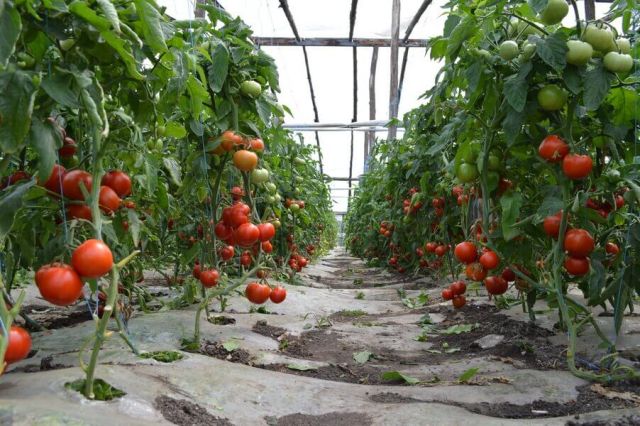
Modern technology culture of tomatoes in greenhouses (winter-summer cycle) to the Red .Cultura emissions.

Modern technology culture of tomatoes in greenhouses (winter-summer cycle) to the Red .Cultura emissions.

• INTRODUCTION
• Obtaining seedlings
• transplanting
• irrigation and fertilization
• treatment plant
• OTHER WORKS TECHNOLOGY
• COLLECTION


Introduction TOP ▲

Modern technology culture for tomatoes in greenhouses (winter-summer cycle)
Introduction
Producing commercial tomatoes in greenhouses cold, unheated or heated greenhouses or cold is minimal in Romania in cycles: winter and summer, and the second summer-autumn. There is also a third form for the production of tomatoes in the form of a longer cycle of spring-autumn in areas where the type of construction of greenhouses, colder climate or manufacture of vegetables such as cabbage, spinach, carrot, onion, etc delaying planting 2 tomatoes does not allow consecutive crops of tomato (this form is private vegetable area Băleni). Basically cycle (short cycle or average) cycle II (secondary cycle) and intermediate cycle longer than is currently the major forms and the majority that produce tomatoes in Romania, except for greenhouses or professional Glasshouse remaining in operation the production cycle is slightly different.
Briefly means 3 forms

The production cycle of:
1.semănarea is winter (from late December to mid-February);
2.plantarea is early spring (in early March) until mid-April at the latest.
The number of stages is from 3 to left (short cycle, extratimpuriu) to 6 floors (medium cycle);
Harvesting begins after mid-May and lasts depending on planting and no stories left to mid-June;

II production cycle;
The sowing of the spring or summer is about 3-4 weeks before the end of culture to be changed tomato;
Planting is done from 20 June to mid-July;
The number of floors in this case is larger than the first floor and varies from 6 to 8, 10 or 12 levels if conditions (early planting and high tanning structure);
Harvesting begins in late August to late autumn by planting, number of floors allowed and conditions provided to installation of solar

Intermediate cycle longer:
Planting is done by mid-March to mid-April;
Planting usually takes place in May;
The number of stages depends on the left allows the construction as greenhouse / solarium;
Harvesting begins after mid-July and runs until late autumn depending on the number of stories allowed;


Obtaining seedlings up ▲

Modern technology culture for tomatoes in greenhouses (winter-summer cycle)

The main constraints to be considered to achieve cost-effectively tomato production in the first cycle are:

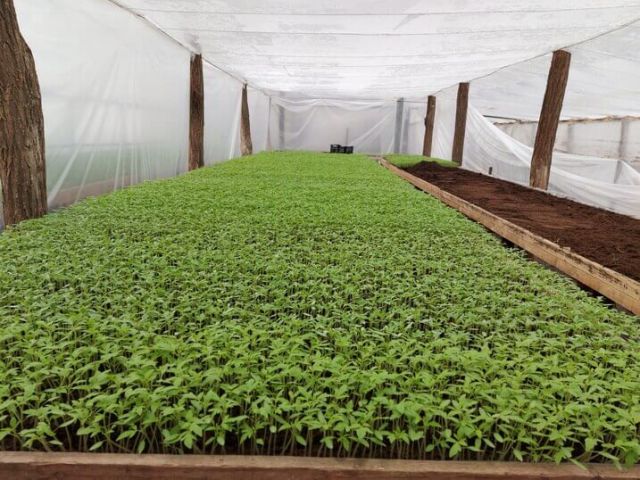
Getting seedling sites - it needs a dedicated space for creating favorable conditions for developing seedlings (while the temperatures outside are negative extreme) temperature, light, ventilation, irrigation;
Type of tanning construction (width, height, large air volume, the presence of professional film coating, etc.);

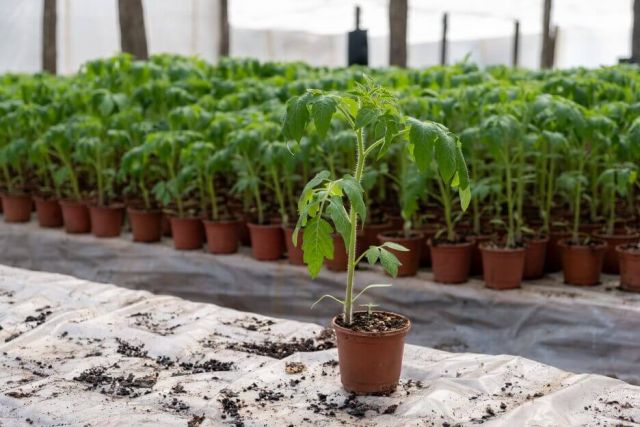
To obtain highly productive crops, good quality and quality is essential as early seedling planting site.

A tomato seedling quality necessary production cycle must meet the following quality parameters:

1. To be aged between 55-70 days
2.Să first floral bouquet in clear view, but in no case be flourished;
3.Să have a height between 20-30 cm;
4.Să be erect at planting (not bend after planting the brittleness of the stem);
5.Să be free of viruses, diseases and pests (phytosanitary treatments must be carried out during seedling vegetation s);
6.Să not present deficiencies of macro and micronutrients (is necessary to make root and foliar fertilization throughout the seedling development sites);
7.Să not be etiolated;
8.Să be robust and to provide a well-developed root system to fill the entire volume of the substrate;
9.Să show no mechanical damage from handling or any such damage;
10.Să be turgid (not to be wilting);
11.Install be hardened;

S tomato seedling

Seedling production sites involves two process steps:

1. Sowing can be done in two ways:
a) On the seedbed; Careful! We do not mean seedbed warm manure - this method is not recommended in any way to obtain a professional seedling, uniform quality and economic losses when using professional hybrid seeds are very high!

S tomato seedling seedbed products

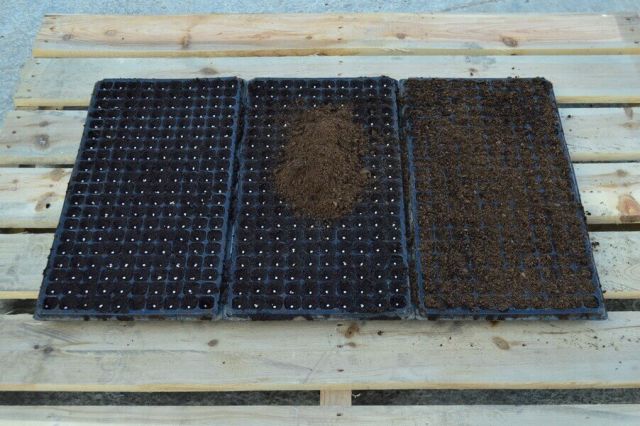
b) alveolar trays;
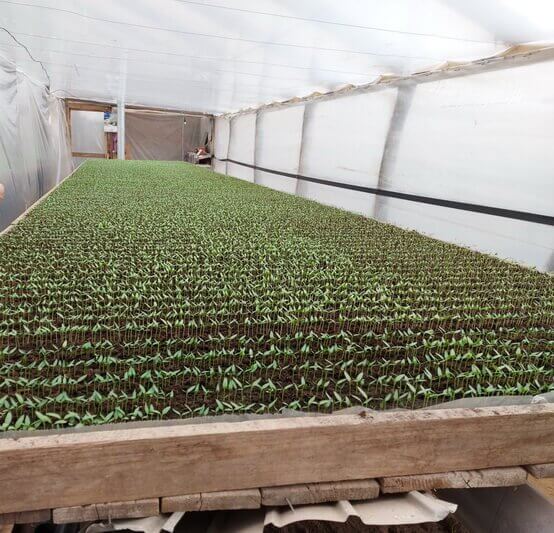
Alveolar trays ready for direct seeding

Repicatul germinating seedlings from the cells or alveolar bed is in plastic pots;


sowing
Planting tomatoes for extratimpuriu and early cycle occurs between 2 to 20 January. In some regions (in the vegetable basin Jelly) sowing takes place even earlier (December 25 to 31) but such farmers have heating greenhouses / greenhouses after planting and also type of construction of greenhouses doubled by using the most modern professional film coating their enable early planting, late February - early March with a minimal risk of freezing tomatoes.

Sowing is the seedbed or alveolar trays. In both cases, the seed substrate is peat EC specially treated to optimize pH's and with the addition of fertilizers. The requirements for a professional on the basis of peat substrate to be used in the production sites in the first stage seed (seed-transplanters) are the following:
1. pH = 5.5 to 6.5; Always check that the packaging substrate to be mentioned pH and be between these values! Peat or substrate with pH values below 5 is for sowing!
2. EC site is not more than 1 dS / m, preferably 0.6-0.8 dS / m;
3. Have added NPK fertilizers and micronutrients; These additives are required in the first 2 weeks of feeding seedlings;
4. The particle size be between 0-10 mm is recommended that between 0-5mm!
5. The peat to be blond, seeding is recommended a mixture of black peat and peat blonde;
6. contain wetting additives; These additives are not binding but must be more careful irrigation substrate constant!

We recommend that at least sowing to be done only professional substrate for sowing (technical specifications above) without any additives. If you still use and soil with peat forest land must be in any case of farms (from own garden or greenhouse or field).
Using only the commercial peat-based substrate for seeding has a number of advantages compared to the use of other substrates or mixtures:
Advantages professional use peat substrate
professional substrate Earth or other mixtures
Free grass seed or insect Seedy and insects may be present
Free of complex diseases "fall seedlings" Increased risk of falling seedlings
pH and EC optimal germination and seedling development sites pH and EC varies depending on the source used
Added mineral perfectly optimized for the first part of seedling development sites Unknown mineral content
Getting seedling uniform Sites Uneven emergence
Rich root development Poor root development

It may also worth mentioning that the operation technological subculturing in the seedbed peat-based, rooted plantlets not suffer wounds major because grain very small peat and ease detachment as if they used ground breaking branches root young are practically unavoidable thus creating wider entry port for vascular disease and stress after subculturing in addition to young seedlings and fragile.

Parameters and conditions required for optimum seed germination of tomato are:
The optimum temperature for germination is between: 22 to 26 o C. The temperature for germination should not be less than 15 o C.
Humidity 100%
The complete absence of light in the first few days until the emergence (or non-coating paper board).
If the substrate is used for sowing professional technological operations are as follows:
Peat moss is wet with water up to complete wetting;
Draw lines through a slight pressure to the substrate;
Rows drawn on peat substrate semanre
Place the seeds one at a time;
Seeding the seedbed in peat substrate
It is covered with a thin layer of substrate of 0.5 cm maximum (no more than small as tomato seed germination, or too much weight too high above the layer greatly delay the emergence);
No more wet then - due to the small grain of peat or subsequent addition of water leads to the discovery of seeds or their deeper burial. And in one case and in another emergence will be uneven;
Cover with newspaper paper or paperboard, the seed bed over which the foil can put a restraint role as long as the moisture necessary for germination of 100% and the optimum răsării tomatoes; Careful!!! This method foil to cover the seedbed applies only to sow tomatoes in winter when sunlight intensity is low and does not create problems of tomatoes; especially during the spring and summer are not used in any form of seed coating film because it leads to choking and destruction of seedlings.
It ensures a constant temperature day / night from 22 to 26 ° C but not more than 15 ° C; lower temperatures between 15-18 ° C irremediably affects tomatoes not only greatly delay the germination and emergence (up to 2 weeks).
If temperatures are optimal start to appear 3-6 days after the first plant, and after the phenomenon of emergence takes place in the table removes coatings to prevent elongation sized seedling emergence, even if emergence is not 100%.

All of the above technological steps are fulfilled where the drilling alveolar trays with the proviso that it is seeded with one single seed in each alveolar cell.

Preparation and sown in trays alveolar

Advantages alveoli Seed girl seedbed are:

1. 7-10 days may be allowed to subculturing more (depending on cell number / well can be left even more) due to the distances between the plant much greater than in the seed bed (the advantage deriving from this is economy heat is made by lengthening the time spent seedling nerepicate sites in the same space smaller than the space occupied seedling picked sites);
2. Injury to the young roots subculturing operation is reduced to a minimum compared to the case in which the seedlings are taken from the seed bed of a plant root hairs which were interwoven with those of the neighbors;
3. Seedling is more robust because of its small between plants;
4. Uniformity sized seedling is very good;
Seedling trays produced alveolar sites
This method of seeding in alveolar trays has a disadvantage that the subculturing operation in pots will be a little more difficult, practically will take longer.

After emergence of the seedlings is necessary to change the complete constant day temperature / night temperature with alternating day / night, and it is necessary that during the day the temperature is between 22-26 ° C and night 16-20 o C. This alternation is required for optimum seedling development sites. A constant temperature day / night or a higher temperature during the night than during the day will result in accelerated growth of the strain (strain thin) at the expense of the plant mass represented by the leaflets, thick stem and root volume. It also aims substrate moisture which will irrigate constant throughout the period until subcultures. With irrigation and fertilization can be made and treatment plant must if sowing was done in the ground or mixed with soil. Fertilization is made in this period, compared with balanced mineral NPK fertilizer (20:20:20 Solufeed), the addition of magnesium and trace elements. Very small doses of fertilizers are 10-20 g / 10 liters of water (0.1 to 0.2%), in place of using 1 tablespoon NPK fertilizer (20:20:20 Solufeed) in a bucket of water. Also for the smooth development of the root system and a small resistance at the seedling stresses sites may be used by wetting or spraying nimble at a dose of 10 ml / 10 liters of water. Phytosanitary treatments in this period include a fungicide against falling seedlings complex (to avoid the risk of phytotoxicity Previcur recommended dose is 0.15% - at this dose did not burn or frunzuliţele top of the young), an insecticide against insects that occur immediately heated space where they like. We recommend as an insecticide for the first phase of development of SMEs is Actara seedling at a dose of 0.02% - the benefits of using this insecticide related systemic its total ity and very important is that the plant can get through the root system is easily transported peaks rise protecting plants efficiently and indoor precisely where it is most sensitive and which are most often attacked by insects, also reached peaks rising Actara induce an effect of biostimulation of meristems growth, an added advantage when used in early stages of development. If there is a risk of mites is recommended to use a acaricide like Vertimec or Milbeknock. One or two preventive treatment plant to subculturing is enough if there is observed symptom s disease or insect seedling emergence Nita.
The note is referred to and that if seedling production sites is made in an area previously used for vegetable disinfection is imperative prior to the structure of the soil and primarily insects and mites! Disinfection may be a few days before sowing seed when heated with an insecticide, acaricide NITE (Tal star for example) by spraying of the soil and the wood structure with a 2-5-fold higher dose (which does not affect ) closes the space for an evening and / or one days then vented. Remember to follow rules and security measures (check and read the label before use) when applying toxic products!

bedding
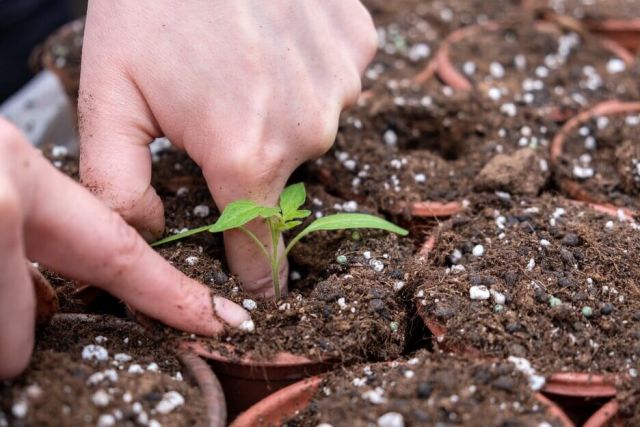
The period between sowing and transplanters is 20-30 days depending on the temperature of the seedling Nita and the substrate used. Basically seedling transplanters is ready in time it can be handled without risk of being broken or damaged during the subculturing operations (even if not met the 20 days the named above). It is also good to have two true leaves well developed and well-developed root system. Repicatului delay inevitably lead to poor elongation strain and serious long-term negative effects on plants.
Tomatoes bedding is required in the plastic mate pots, dark, light which does not penetrate the root. Note that the roots come into contact with the light of its specific functions loss reduced by absorbing water and nutrients! It should also be noted that, irrespective of the plants pricking out, a large volume of the substrate is always preferable to a smaller volume.
technology-the-culture-for-tomato-cycle Them
S seedling grown in trays of 45 cells (left) and in trays of 28 cells (Dr.)

technology-the-culture-for-tomato-cycle Them
Differences in development of the seedling's volume is different from the substrate
In order to obtain tomato seedlings sites are recommended to cycle round pots with a diameter of 9 cm or 10 cm height as possible. Also they can be used alveolar trays of 28 cells / tray, but great care must be taken not to delay planting period because the plants will grow explosively in height in a very short time.
The substrate used for subculturing can be a mixture of peat forest soil, even the used sowing can be used. If not used peat to improve the texture of the substrate and using garden soil for example (method successfully used widely in large pools of vegetables), make sure that it is well decomposed, with a very fine texture, be cattle or sheep (in any case in a bird !!!) and not to add excessive amounts (ratio 1/4 or 1/5 no adverse effects on seedling development sites). Use of manure which is well decomposed as a mixture to the substrate seedling roots lead to burning, the release of ammonia plants and little yellowing stop their growth. If garbage is poorly decomposed risk immediately after subculturing to drop all sites seedling due to release a large amount of ammonia (development induced wet garbage and high temperatures) in a very short time. For these reasons, to avoid risks caused by sources of manure or state of decomposition can be used successfully with the mixture of earth forest seedling substrate sites.
Immediately after subculturing to maintain a constant temperature day or day / night 22-24 ° C to reduce stress fast bedding and resume as soon as the seedling development sites. After these 2 days, returns to the alternating day / night temperatures. The difference between day and night temperatures should be 5-7 ° C, noting that temperatures should not be made at night or day to fall below 5 ° C and a night temperature higher than the day will induce vegetative growth at the expense of elongation strains normal.
Throughout the development of sites seedling plants will be constantly track watered, fertilized and treated for pests. As sowing and seedling space used for bedding sites must be disinfected in the same way. Space disinfection prior to greatly reduce the risks of an attack on seedling sized insects. The presence of the seedling niţă a insects (thrips, whiteflies, muscular black) even in an extremely small number can cause major damage because these insects destroyed by feeding in particular the tip growth (the most soft, juicy and sensitive the seedlings in the development phase) of numerous sites seedling (seedling's have a much higher density than crops). How thrips feeding begins work at a temperature of 8 ° C, regardless of the season, the likelihood of such spaces is almost certain. For this reason we recommend that the first or second irrigation at the latest to use Actara for seedling protection against such insects sites. Also 1-2 against falling seedlings Previcur treatments are recommended during this period (10-14 days of rest between treatments). As an alternative to Previcur can be used against falling Folpan Topsin or seedlings but with great care not to touch the tips of seedling sensitive sites because there is great risk that they be destroyed after treatment if not properly conducted. If there is danger of mites and 1-2 treatments are recommended acaricides such as Vertimec or Milbeknock.
The application of fertilizer during this period is constant at each irrigation. Is used as a fertilizer NPK fertilizers balanced in the same concentrations as the seedling s (10 to 20 g / 10 liters of water). Also a very good root development can be used agronutrienţii (fertilizers art technical) such as agile, Salwax and Calciamec / Alcaplant. The use of these agronutrienţi induce smooth development of the root system, stem thickening, vigorous development of the vegetative nervous system, and also shortening of the internodes distances induce a higher resistance to stresses (cold, drought, disease attack, salinity, etc.).
With regard to the temperature conditions in this period, if there are more than one C 35-40 easy ventilation space is required in which the seedling's.
Also, if the pots were placed subcultures stuck together is necessary from time to time their thinning to avoid seedling elongation height sites. When thinning is when the leaves begin to reach peaks adjacent to each other. Basin vegetable jelly (but also in other areas where conditions permit) there are technological thinning operation of tomatoes around 2-3 weeks before planting the beds down on the ground.

Seedlings thinned sites on earth
This method gives farmers some clear advantages: a thinning very good seedling sites (leaves neighbors no longer touch each other and so each plant receiving exposure and a maximum of light, precipitating the rapid development), quenching optimal plant prior to planting (plants are placed directly on the ground, taking contact with the new environment) and, in addition, may work better. Of course this method also requires attention in hand to maintain the optimum temperature (or at least the minimum 5 ° C) to develop tomatoes that reason this method is achieved where there are conditions: heating and film professional coverage. The period during which the pots stand on the ground with tomato is about 2-3 weeks until the conditions are fulfilled for planting in the ground. If it uses this method of thinning on the ground and pots used did not bottom roots seedling sites will grow deep into the soil (as the period is longer so and their growth will be faster) so planting the majority of these beams will be completely broken root leading to an enormous stress for plants, and the wounds are input to gates of all the diseases of the soil, worms including nematodes or wire. This injury to the roots of the transplanted plant disease is the leading cause of vascular diseases and infestation by nematodes and worms wire.
If the seedling sites increase in height and can not be planted there are several methods to slow the growth of the strain: deprivation of water to the extent of withering, deprivation of heat (but just less than 5 ° C) or using retardants growth.

Transplanting up ▲

transplantation
Several days before the transplant operation technological need the following technological operations:
1. sites seedling by stopping the quenching stresses heat and ventilation of the space as tightly as Nite seedling;
2. sprayed with a foliar fungicide and insecticide (preferably both at least one system component a); Nita seedling by applying it saves time, pesticide, and water, and the plants will be protected at the time of planting of any foliar diseases.
3. prepares the ground for transplanting - to loosen the tiller, to make holes for planting,
4. install drip irrigation system;
5. prior to planting crops of vegetables in any hothouses and greenhouses is better to make a soil disinfection. The best method is disinfection about a month before planting Basamid. If disinfection is not possible to Basamid and the previous crop have been reported a few days is recommended nematodes prior to planting soil application of nematocidal products.
6. If the mulching, the transparent film mulch before planting to install all;
7. It is recommended that before planting to apply an insecticide against coropişniţelor, which would otherwise cause massive losses immediately after planting.
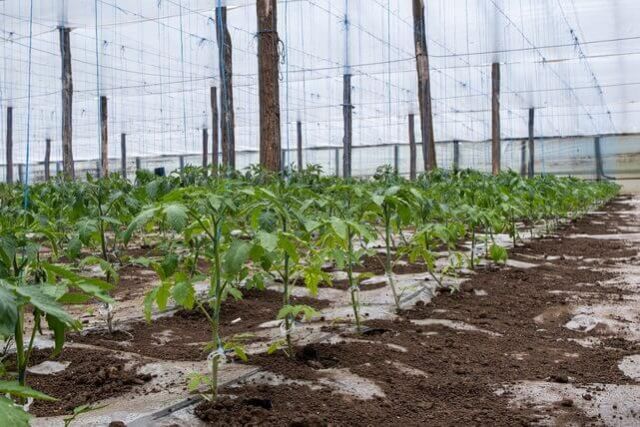
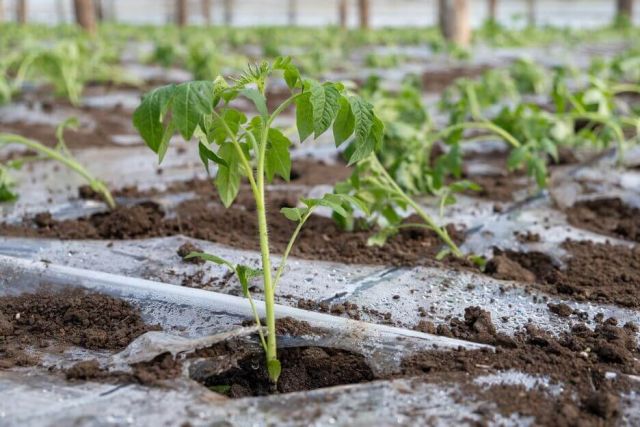
The density of the culture of tomato plants used in the first cycle is between 40000-45000 plants / hectare. This density can be reached in the first cycle as vegetative plants have stronger spring power, tomatoes floors 3-6 are left as they are broken peaks, so that high density does not create a strongly limiting plant stress.
As a method of planting two variants can be used: distance equal distance between alternate rows and between rows (two closely followed by 2 below). The most used method is the cycle with alternating distance between rows, for example, close spacing of 60 cm, and the distance between the rows 90 cm distant. The distance between the plants should be 30-35 cm, so 40-45000 there is provided a plant density / ha.
technology-the-culture-for-tomato-cycle Them technology-the-culture-for-tomato-cycle Them
The distance between the alternating rows (2 remote area, and 2)


Irrigation and fertilization UP ▲

Irrigation and fertilization
Always before the establishment of vegetable crops it is recommended to perform the soil to revealing reserves of nutrients and organic soil on the one hand and on the other hand for the preparation of a rigorous and effective fertilization program properly.
In developing an efficient and optimal fertilization program to get maximum production and quality of a hybrid SC Marcoser SRL has the following parameters:
a) soil analysis reveals the macro supply levels (N, P, K mainly) mezoelemente (Ca and Mg) and trace elements (Fe, B, Cu, Zn, Mn, Mo) where; also take into account two critical parameters are the pH (acid or basic reaction of the soil) and EC (electroconductivitatea or salt concentration of the soil);
b) Another parameter to be considered is the type of crop established, being known that different types of vegetables (tomatoes, cucumbers, peppers, eggplants, etc.) have different requirements in terms of macro and micronutrients level;
c) planting season - due to the fact that during the cold seasons although there may be soil optimal levels of supply nutrients not available to plants due to their properties when the soil is cold (for example, phosphorus is such an element that although the present the availability in the soil for the plant roots decreases towards zero as the soil temperature of 10-12 ° C); Instead summer not only plants but all items are available due to strong mineralization of organic matter available nitrogen levels increase considerably;
d) growing cycle (short, medium, long) significantly influence the necessary quantities of fertilizer application program - it is evident that a cycle of three floors tomato crop will not have the same consumer to a cycle of 6 floors;

Although there are other parameters considered, but less relevant with the above parameters are entered in a software of last generation that will generate a fertilization program strictly specific solarium from which the sample was taken for culture that It will be established. The results obtained following such a procedure may be 40% higher than the manuring "by ear".

If not conducted soil analysis fertilizers can be applied after a general plan that takes into account a lot of physiological peculiarities of culture established (required macro and micronutrients, phenophases own development vegetable species set). It also takes into account a level above the average of salts in the soil to prevent a possible salinity stress and supplemented phosphorus, calcium and potassium. Thus as the basic fertilization is administered (preferably fall before plowing or digging) manure bovine or ovine decomposed at a dose of 60-80 tons / ha. The basic fertilization throughout the amendment of calcium is added (Dolomite) if the soil is strongly acidic reaction dose is increased, and if the pH is above 7 to no longer recommended application. The dose per hectare of dolomite is about 3 tons / ha once every 3 years or 1 ton / ha per year. Another very appropriate amendment is superphosphate (single superphosphate if it is 20% is applied to 500 kg / ha). A part of the necessary nutrients are provided by culture of tomato basic fertilization, another part of the reserves of the soil, and the rest of the optimum development of plants is necessary to apply fertilizer during Phasial called the culture.

Phasial fertilizer application in fertilization is done by two methods:
1. Application root in soil with the irrigation water, the method called fertiirigare;
2. Application by spraying, alone or together with certain pesticides (attention to the compatibility) - called foliar fertilization process;

Administration fertilizers during plant development must take into account the following aspects:
a) phenological stages of development:-flowering plants, flowering stage I - III flowering stage, intense vegetative growth, harvesting, etc;
b) enhancing natural processes of the plant while the environmental parameters are not conducive to optimal development of tomatoes: strong root development, induce flowering, increasing fruit, etc.
c) rapid recovery plant as a result of the stresses incurred: transplantation, salt, cold, drought, heat, humidity, excessive attack of the disease, etc.

Considering all of the above SC Marcoser SRL offers professional advice on managing agricultural crops administering your vegetable fertilizers.

Irrigation, with proper preparation of the soil before planting, is one of the most important factors leading to the success of vegetable crops. Below are some basic principles regarding irrigation of vegetables in greenhouses and solariums:
1. The recommended method of irrigation tomatoes in hothouses and greenhouses is drip irrigation; (see advantages)
2. tomato crops drip irrigation system used must fulfill the following conditions;
a) a throughput of 1.6 to 2.5 L / h / dispensing water at a pressure of 0.5 to 1 atm
b) be the distance between the peaks of 20-30 cm (Note that it is a condition that the dropper to be the base of the stem of tomatoes, but drip line should be as close to the plant);
3. irrigation must always be morning as possible (recommended is 1-2 hours before sunrise)
4. The watering must be done often and consistently as possible, the recommended frequency is every day with some water combined with environmental conditions: fewer cold days and more on hot days;
5. is added to each irrigation and fertilizers, respecting the principle of "as much as possible in as small portions" (fertilization teaspoon); thus the recommended dose weekly will be applied daily in equal portions to the number of applications made - for example, if we apply one kg of a particular fertilizer on the week and the week will be five irrigation at each irrigation will apply 1: 5 = 0.2 kg fertilizer / irrigation. Thus the plant will use all the manure and will not suffer from shock saline due to large amounts of fertilizer application.


▲ UP treatment plant

pesticide treatments
As with other technological links and for pest control are some general principles to be respected regardless of protected crops or commercial products used. Pest control plans developed by SC Marcoser SRL are based on the principle that prevention of disease is less expensive than their control ,. The following are some general guidance in the use of pesticides in their pest:
1. Always read and follow label recommendations and security measures of the use of plant protection products;
2. In the first part of plant development (after transplanting) is a fungicide used is at least 2 components, one contact and one systemic. The rationale for use of such compounds in period is given by the fact that the plants have an accelerated rate of vegetative growth (rapid growth), so that when using only the fungicide is the contact strength to protect them becomes 0 in tissues and newly formed organs, tissues and organs that can be adequately protected by a single system component. Later, when the foliage is fully developed, the tips are broken in short-cycle tomatoes can be used with good results they contact fungicide;
3. in the case of insecticides and acaricides have chosen the same principle as in the case of fungicide met: systemic development in the first part and the E / contact of the two;
4. Always alternate plant protection products; avoid using 2 or more times the same active substance; every application alternate substances with different modes of action so as not to increase resistance to pesticides and pests. A plant protection product can be used as many times as recommended by the manufacturer during a culture condition that between two successive uses of the same product to be used and different product with a different mode of action;
5. phytosanitary treatments carried out for prevention and control are made at an interval of 7-10 days depending on the pressure of the incidence of the disease;
6. The use no more than 3-5 active substances (Caution 5 5 not active and to a product produced may contain different substances and 3) a single application in order not to stress especially phytotoxic to plants when it is systemic substances it is because the plant has a limited number of gateways regardless of the number of substances applied and the increase will lead to a blockage physiological leaf: phytotoxicity;
7. doses of the active substances used are calculated based on the age of the plants and the treated surface and not on the amount of water used because it can vary within very wide limits due to the various machines is carried out by spraying (pump Vermorel , atomizers, sprayers, etc.). For example tomatoes since vegetative growth phase of fruits (flowering stage III) to be used strictly all recommended dose at the surface regardless of the amount of water used;
8. If there are no stimulated tomatoes pesticide spraying one day before and after stimulation;
9. treatments with plant protection and foliar fertilization can be provided that the materials used are compatible;


Other engineering works up ▲

Other technological works
trellising
Trellising tomatoes cycle can be done in two ways:
1. trellising on a string;

Trellising tomatoes on a string
2. trellising on stakes;
technology-the-culture-for-tomato-cycle Them
Trellising tomatoes on stakes

Trellising the thread is used in particular in greenhouses and solaria less because this method requires a solid structure of the tanning - while affecting the backbone of the weight of the plants (plant + the load of the weight of the fruit).
If used trellising the thread are three methods of attachment of the thread to support plant: use of a ring which secures the thread and the plant, the binding simply floss at the base of the plant or the binding thread of the pin is stabbed the soil around the plant. Whatever method is chosen on the thread lead tomatoes Twist regular (1-2 times per week) to strain around the thread. Thread used must be very thin because there is a risk that the plant is hurt by cutting the action of its own weight.

If using trellising on stakes, they stick in the ground as close to the plant and carefully because this operation takes place massive injury and destruction of sheaves root (therefore recommend that immediately after they finish the thrust aracii to be delivered through the irrigation water a systemic fungicide to reduce the risk of contracting this stage plants). By linking regular (always recommended in the bouquet) thread plant is very well supported by the prop. The advantage of using poles for support of tomatoes is that not "threaten" the structural integrity of the greenhouse / solarium, and some operations (spraying for example) are easy to make given that we are dealing with a high density of plants.

Copilirea
Breaking shoots or copilirea is recommended to be done before the sprout length of 5 cm to attain. If lăstărirea is to sprout has 5 cm scar wounds quickly, the plant heal faster and not suffer from this operation. If delay copilitul plant will begin to turn to shoot much of the products of photosynthesis at the expense of fruit growing, the decreased appearance of new leaves and blossoms, the wound caused by rupture is much larger and harder to cure, turning true input in the gates of the disease. In any case regardless of when it was lăstărirea, the operation wounds plant (wound small or large to increase them in the atmosphere is a gateway to the plant) and immediately after completion of the work is given a fungicide (as the best properties of scarring if possible) to protect the plant from possible infection with pathogens present in the air. Note that whenever performing operations that create open wounds should immediately come up with a treatment plant for plant protection from possible illnesses.

For tomatoes early and extratimpurii to hasten fruit maturity breaking operation is performed immediately after the appearance of peaks last inflorescences. This operation is called meat. Breaking peak is after the last bloom but keeping at least one leaf or two with function "pull sap." In this way all the products of photosynthesis are directed towards the fruit, and the time required to reach maturity is reduced considerably.

defoliation
Plant vegetative mass represented by the foliage is very important because it is factory or kitchen plants that produce all of the compounds necessary for the development of new tissues and organs, fruit growing, etc. Although it is very important to have a well developed leaf apparatus to support the feed as many fruits are cases where it is necessary to remove leaves - defoliation. There are several reasons why we recommend defoliation such as wilting and drying of leaves due to insufficient quantity of light that reaches them (this phenomenon often happens at basal leaves), need for ventilation strongest ground level in greenhouses / greenhouses with high humidity. The basic rule that should be taken into account when defoliază tomatoes is as follows: 80-90% increase of the required compounds, and fruit development of the inflorescence are some of the first two leaves produced prior to tassel (2 leaves under the bouquet) and inflorescence above the first leaf.So when defoliază tomatoes, remove the first leaves from the base provided that they are senescent (yellow, aging, faded) anyway no longer function photosynthesis but accumulates and freezes very much calcium you not arrives where it is needed it (peaks growth, fruit, etc.) and a maximum of up to 2 leaves in the inflorescence. After harvesting the entire floor can complete defoliation to that floor.

Pollination and stimulating
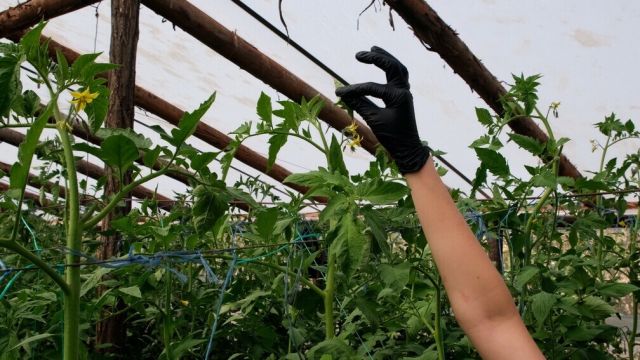
Tomatoes are plants that have male and female components are located on the same flower pollination and therefore is very easy, simply moving the plant is enough for pollination.

The structure of the tomato flowers
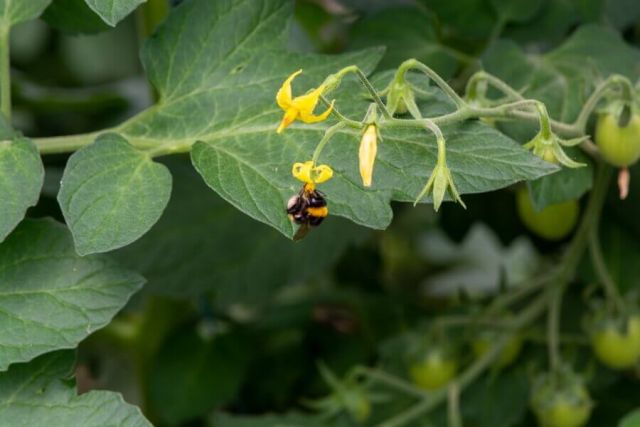
For pollination optimal can successfully use bumblebees provided to ensure optimal temperatures for bumblebee - under very low temperatures specific spring in the first part of its bumblebees do not leave the hive such as pollination and binding tomatoes may be compromised first floors. Other methods of pollination, such as the use of electric or vibratory atomisers are methods using little or no use in practice.

Stimulation
Due to unfavorable climate conditions during the first part of spring may occur many problems with linking fruit. In cold conditions pollen viability greatly decreases the percentage of fruits and fruit related to these conditions will have major distortions or other physiological defects. To reduce these problems the practice treatments growth regulators (auxins, gibberellins, etc.). These substances are designed to stimulate / high growth rate related fruit faster than normal. Treatments using growth regulators, so long as they are made to commercial products and the recommended doses does not affect the health of consumers. Stimulation can be done in two ways: by washing of inflorescences in a container with a solution of stimulation or by spraying the flowers with a light spray. In the case of the method by spraying Care is as high as for the jet to the growing tip does not touch the sensitive plant or other compounds may raise strong peaks because the growth of the plant, causing physiological stress. If, however, the plant suffers from a physiological stress exhibited by squeezing the leaves from the top, thinning them spirally winding a foliage treatment is recommended Agroxilato rich in trace elements nimble Mix 0.3-0.5% and 0.2%. Such treatment plant revives strong and helps to recover quickly from the stress continued their normal development.


Harvesting UP ▲

harvesting
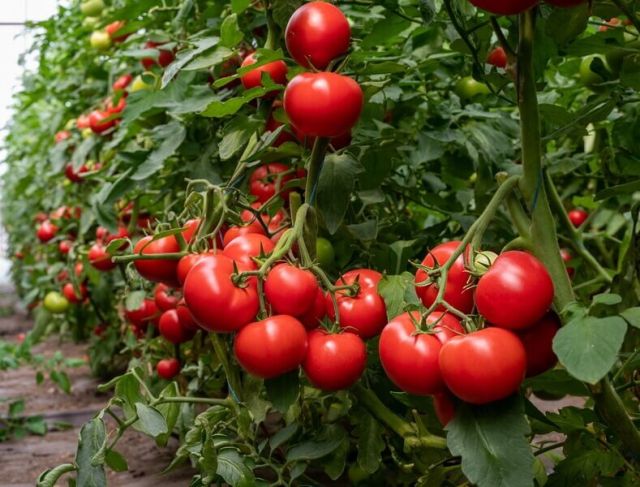
Traditionally tomato fruits are harvested when they reach maturity biological, ie when the fruit changes color from green to red. This harvest no longer practice in large pools vegetables through the use of new hybrids of tomatoes valuable genetic hybrids that have properties POSTMATURARE: harvested ripe fruits reach maturity commercial (dark red color and sweet taste) flawless ( yellow spots, soft, altered, etc.)! For this reason hybrids that have this property very important postmaturare recommended harvesting the first fruits - the fruits begin to change color from green to orange or pink. This is the right time for harvesting for hybrids Amanda F1, Lady Rosa F1, F1 Rosaliya . Below is the right time for harvesting in these Tomato.

So yes!!!


So NO!

If these hybrids harvested during the ripening presents clear advantages:
1. The weight of the fruit in the development phase is maximum;
2. neîncepând still normal metabolic processes that occur in the stage of full maturity of the fruit during storage and transport and storage resistance increases considerably;
3. fruit load due to all stages of development are the time required of a fruit to ripen naturally in the plant is higher than when it is ripe and stored properly made (for 5 days on the plant for 2-3 days after harvesting ripe);
4. As soon as the fruits were removed from the plant ripen it to redistribute their resources so that the remaining fruit maturation period and thus considerably shortens and the harvesting period is shortened having to do with the harvesting concentrated in this case;
5. harvesting the first fruits of tomatoes reduce the risk of near 0 fruit quality problems, the most common being the fruit cracking;
6. fruit quality in terms of color, taste and other properties in the same ripening fruits harvested from mature the plant, or in the case of hybrids which have the property of POSTMATURARE.
Careful! Not all hybrids on the market have this property postmaturare!

Harvesting is done manually, one at a time depending on the degree of maturity of the fruit. Storage and transport of tomato is most often in cardboard boxes (the most common being used for fruits packaging such as boxes of bananas).

Another important property of the tomato set (Amanda F1, Lady Rosa F1, Rosaliya F1) , in addition to POSTMATURARE, the resistance to transportation and storage due to the presence of the genetic characteristics referred to LSL (short for Long Shelf Life - literary translation is life long shelf Romanian or increased resistance to transport and storage). Regardless of the stage is collected (ripe or mature) fruits did not melt immediately after harvesting, they resisting 5 to 15 days to harvest, in the hybrid, and alter the firmness without the original.
Careful!Do not confuse genetic characteristics of genetic characteristics POSTMATURARE with LSL are two different characteristics distinct effects! Most professional varieties of tomato hybrid on the market presents LSL gene but not POSTMATURARE feature!

After harvesting the fruit it is recommended that all plants to be removed from the greenhouse / solarium with root to decrease the risk of vascular disease or syndrome fall of plantlets after planting the seedling s next crop cycle.
source: http://www.marcoser.ro/consultanta/tehnologii-moderne-de-cultura-a-legumelor/ggggggg

Modern technology for culturing red pepper in hothouses and greenhouses. Growing peppers in the greenhouse.

Modern technology for culturing red pepper in hothouses and greenhouses


To come to you with as much information about increasing peppers in greenhouses and solariums The following are our recommendations on this culture.

Culture of pepper in greenhouses / greenhouses is a crop year, with a long production cycle and therefore should be considered a special care in the first part of plant development (especially to first harvest).

seedling sites

To obtain highly productive crops, good quality and quality is essential as early seedling 's planting.
To obtain seedling 's pepper requires a dedicated space for creating optimal conditions for the development of seedlings - seedling Nita heated for winter sowing takes place.

A seedling pepper good quality required for annual crop must meet the following quality parameters:

1. Have aged between 60-80 days;
2. To see the floral button to Internode 0 (Internode) is Internode where the main stem begins development on several branches);
3 .Să have a height between 20-30 cm;
4 .Să be erect at planting (not bend after planting the brittleness of the stem);
5 to be free of viruses, diseases and pests (it is necessary to carry out treatments during the plant vegetation seedling s);
6. Do not present deficiencies of macro and micronutrients (requires root and foliar fertilization performing all along the seedling s);
7. Do not be etiolated;
8. Be vigorous and present a well-developed root system to fill the entire volume of the substrate;
9. Do not show mechanical damage from handling or any such damage;
10 .Să be turgid (not wilted to);
11. Be hardened;

Production seedling sites involves two process steps:

Sowing can be done in two ways:
1.Pe seedbed;

Careful! We do not mean seedbed warm manure - this method is not recommended in any way to obtain a seedling professional, uniform quality and economic losses when using professional hybrid seeds are very high!

2. In the alveolar trays;

Repicatul germinating seedlings from the cells or alveolar bed is in plastic pots;

sowing
Planting peppers takes place in the first half of January, between January 2 to 20. In some regions (in the vegetable basin Jelly) sowing takes place even earlier (December 25 to 31) but such farmers have heating greenhouses / greenhouses after planting and also type of construction of greenhouses doubled by using the most modern film coating professional their enable early planting in early March with a minimal risk of freezing peppers.

Sowing is the seedbed or alveolar trays. In both cases, the seed substrate is peat EC specially treated to optimize pH's and with the addition of fertilizers. The requirements for a professional on the basis of peat substrate to be used in the production of seedling s in the first stage (seed-transplanters) are the following:
1. pH = 5.5 to 6.5; Always check that the packaging substrate to be mentioned pH and be between these values! Peat or substrate with pH values ​​below 5 is for sowing!
2. the EC (electro-conductivity of the soil or soil salt concentration) is not less than 1 dS / m, preferably 0.6-0.8 dS / m;
3. Have the addition of NPK fertilizers and micronutrients; These additives are required in the first 2 weeks of feeding seedlings;
4. The particle size be between 0-10 mm is recommended that between 0-5mm!
5. The peat to be blonde, is recommended for seeding a mixture of peat and peat blonde black;
6. contain wetting additives; These additives are not mandatory but without them will be given greater care to irrigate constant substrate!

We recommend that sowing be done only professional substrate for sowing (technical specifications above) without any additives. If you still use and soil with peat forest land must be in any case of farms (of greenhouse own garden or field).
Using only the professional based on peat substrate for seeding has a number of advantages compared to the use of other substrates or mixtures:

Advantages professional use peat substrate
professional substrate Earth or other mixtures
Free grass seed or insect Seedy and insects may be present
Free of complex diseases " fall seedlings " Increased risk of falling seedlings
pH and EC optimum germination and growth of seedlings sites pH and EC varies depending on the source used
Added mineral perfectly optimized for the first part of developing seedling sites Unknown mineral content
Getting seedling s uniform Uneven emergence
Rich root development Poor root development


May also worth mentioning that the operation technological subculturing in the seedbed based on peat, roots seedlings do not suffer injuries imminent because grain very small peat and ease detachment as if they used ground breaking branches root young are practically unavoidable thus creating wider entry port for vascular disease and stress after subculturing in addition to young seedlings and fragile.

The parameters and conditions required for optimal germination of pepper seeds are the following:
1. optimum germination temperature range: 24 to 26 o C. The temperature for germination should not be less than 17 o C.
2. Humidity 100%
3. The complete absence of light in the first few days until the emergence (or non-coating paper board).

If the substrate is used for sowing professional technological operations are as follows:
1. The wet peat with water up to complete wetting;
2. Draw lines through a slight pressure to the substrate;
3. Place the seeds one at a time;
4. Cover the substrate with a thin layer of up to 0.5 cm (not more than pepper seeds for germination have little, or too much weight too high above the layer greatly delay the emergence);
5. They do not wet after sowing - due to the small grain of peat or subsequent addition of water leads to the discovery of seeds or their deeper burial. And in one case and the other will not be uniform emergence;
6. The paperboard is covered with papers or paper seedbed over which the foil can put a restraint role as long as the moisture necessary for germination of 100% and the optimum sweet răsării; Careful!!! This method foil seedbed coverage applies only to sow peppers in the winter when sunlight intensity is low and does not create problems peppers; especially during the spring and summer are not used in any form of seed coating film because it leads to choking and destruction of seedlings.
7. ensure a constant temperature day / night between 22-26 ° C but not more than 15 0 C; lower temperatures between 15-18 0 C affects not only irreparably peppers greatly delay germination and emergence (up to two weeks).
8. If temperatures are optimal after 4-6 days began to appear the first plant, and after the phenomenon of mass emergence occurs remove coatings to prevent elongation seedling sites emerged, even if emergence is not 100%.
All technological steps above respect and for drilling in alveolar trays marked as sowing in them is done with one single seed in each alveolar cell.

Advantages alveoli seed from the seed bed are:
1.Pot be left 7-10 days longer to subcultures (according to the number of cells / well can be left even more) distances between plants due to much higher than the seedbed (advantage deriving from this is economy heat is made by lengthening the time spent seedling sites nerepicate the same space smaller than the space occupied by seedling sites picked)
2.Rănirea the young roots subculturing operation is reduced to a minimum compared to the case in which the seedlings are taken from the seed bed of a plant root hairs which were interwoven with those of the neighbors;
3. Seedling is more robust due to the low density between plants;
4.Uniformitatea seedling sites is very good;

This method of sowing in alveolar trays has a disadvantage that the subculturing operation in pots will be a little more difficult, practically will take longer.

After emergence of the seedlings is necessary to change the complete constant day temperature / night temperature with alternating day / night, and it is necessary that during the day the temperature is between 24-26 0 C and 18-20 0 C. The night alternation is required for optimal development of seedling sites. A constant temperature day / night or a higher temperature during the night than during the day will result in accelerated growth of the strain (strain thin) at the expense of the plant mass represented by the leaflets, and thick stalk volume root. It also aims substrate moisture which will irrigate constant throughout the period until subcultures. With the irrigation and fertilization can be made and treatment plant must if sowing was done in the ground or mixed with soil. Fertilization is made in this period, compared with balanced mineral NPK fertilizer (20:20:20 Solufeed), the addition of magnesium and trace elements. Very small doses of fertilizers are 10-20 g / 10 liters of water (0.1 to 0.2%), in place of using 1 tablespoon NPK fertilizer (20:20:20 Solufeed) in a bucket of water. Also for the smooth development of the root system and a small stress resistance at the seedling sites may be used by wetting or spraying nimble at a dose of 10 ml / 10 liters of water. Phytosanitary treatments in this period include a fungicide against falling seedlings complex (to avoid the risk of phytotoxicity is recommended Previcur in dose 0.15% - this dose does not burn tip or young frunzuliţele), an insecticide against insects that occur immediately heated space where they like. We recommend as an insecticide for the first phase of development of seedling sites is Actara the dose of 0.02% - the benefits of using this insecticide related systemic cowardice its total and very importantly, the plant can get through the root system is easily transported peaks rise protecting plants efficiently and indoor precisely where it is most sensitive and which are most often attacked by insects, also reached peaks rising Actara induce an effect of biostimulation of meristems growth, an added advantage when used in early stages of development. If there is a risk of mites is recommended to use a acaricide like Vertimec or Milbeknock. One or two preventive treatment plant to subculturing is enough if there is observed symptom s disease or insect emergence in seedling Nita.
The note is referred and if the production of seed s is a space previously used for vegetable disinfection is imperative prior to the structure of the soil and primarily insects and mites! Disinfection may be a few days before sowing when heated seedling ned with an insecticide, acaricide ( Tal star for example) by spraying of the soil and the wood structure with a dosage of 2-5 times higher (which does not affect ) closes the space for an evening and / or one days then vented. Remember to follow rules and security measures (check and read the label before use) when applying toxic products!

bedding
The period between sowing and transplanters is 20-30 days depending on the temperature of the seedling Nita and the substrate used. Basically seedling is ready transplanters since it can be handled without risk of being broken or damaged during the subculturing operations. It is also good to have two true leaves well developed and well-developed root system. Repicatului delay inevitably lead to poor elongation strain and serious long-term negative effects on plants.
Sweet subculturing is required in the plastic mate pots, dark, light does not penetrate through the root. Note that the roots come into contact with light greatly reduce their loss to the specific functions of water absorption and nutrients! It should also be noted that, irrespective of the plants pricking out, a volume greater than the substrate it is always preferable to a volume less. To obtain seedling s pepper greenhouses / tunnels are recommended diameter round pots of 9 cm or 10 cm height as possible.

Square pots can also be used dimensions 7x7x8 cm provided seedling sites have age 60 days. Also they can be used alveolar trays of 28 cells / tray, but great care must be taken not to delay planting period because the plants will grow explosively in height in a very short time.
The substrate used for subculturing can be a mixture of peat forest soil, even the used sowing can be reused. If peat is used to improve the texture of the substrate and garden soil is used as an example (method widely used successfully in large pools vegetable); care must be taken that it be highly decomposed, with a very fine texture, be cattle or sheep (in any case in a bird !!!) and not to add excessive amounts (a 1 / 4 or 1/5 no adverse effects on the development of seedling s). Use of manure which is better for the substrate decomposed as a mixture of seedling lead to burn the roots, the emission of ammonia plants and little yellowing stop their growth. If garbage is poorly decomposed risk immediately after subculturing to drop all seedling sites due to release a large amount of ammonia (development induced wet garbage and high temperatures) in a very short time. For these reasons, to avoid risks caused by sources of manure or state of decomposition can be used successfully forest soil mixture substrate for seedling sites.
Immediately after subculturing to maintain a constant temperature day or the day / night of 24 to 26 0 C to reduce stress fast bedding and resume as soon as the development of the seedling 's. After these 2 days, returns to the alternating day / night temperatures. The difference between day and night temperatures should be 5-7 0 C, noting that should not be made at night or day temperatures fall below 7-8 0 C and a higher temperature at night than day will induce elongation of stems in damage normal vegetative growth.
Throughout the development of the seedling sites will be constantly track the plants watered, fertilized and treated for pests. As sowing space used for bedding seedling sites must be disinfected in the same way. Space disinfection prior to greatly reduce the risks of attack by insects on seedling sites. The presence of the seedling niţă a insects (thrips, whiteflies, muscular black) even in an extremely small number can cause major damage because these insect destroying, by feeding, in particular the tip growth (the most soft, juicy and sensitive seedlings in the development phase) of many seedling sites ( seedling 's have a much higher density than crops). How thrips feeding begins work at a temperature of 8 0 C, regardless of the season, the likelihood of such spaces is almost certain. For this reason we recommend that the first or second irrigation at the latest to use Actara protection seedling sites against such insects. Also 1-2 against falling seedlings Previcur treatments are recommended during this period (10-14 days of rest between treatments). As an alternative to Previcur can be used against falling Folpan Topsin or seedlings but with great care not to touch the tops sensitive seedling sites because there is great risk that they be destroyed after treatment if not properly conducted. If there is danger of mites and 1-2 treatments are recommended acaricides such as Vertimec or Milbeknock.

The application of fertilizer during this period is constant at each irrigation. Is used as a fertilizer NPK mineral fertilizer (20:20:20 Solufeed) equilibrated in the same concentrations as the seedling s (10 to 20 g / 10 liters of water). Also a very good root development may be used agronutrienţii (fertilizers, technical state of the art) such as nimble 0.1%, 0.2% and Calciamec Salwax / Alcaplant 0.2% . The use of these agronutrienţi induce smooth development of the root system, stem thickening, vigorous development of the vegetative nervous system, and also shortening of the internodes distances induce a higher resistance to stresses (cold, drought, disease attack, salinity, etc.).
With regard to the temperature conditions in this period (day increases, the light intensity increases, the outside temperature increases), if there are more than 35-40 0 C must be easy ventilation of the space in which it is seedling sites.
Also, if the pots were placed subcultures stuck together from time to time it is necessary to avoid lengthening their thinning in height seedling sites. When thinning is when the leaves begin to reach peaks adjacent to each other. Basin vegetable jelly (but also in other areas where conditions permit) there are technological thinning operation peppers, around 2-3 weeks before planting the beds down on the ground. This method gives farmers some clear advantages: a thinning very good seedling sites (leaves neighbors no longer touch each other and so each plant receiving exposure and a maximum of light, precipitating the rapid development), quenching optimal plant prior to planting (plants are placed directly on the ground, taking contact with the new environment) and, in addition, may work better. Of course this method requires a carefully increase in hand to maintain the optimum temperature (or at least minimum 7 0 C) to develop peppers, therefore this method is achieved where there are conditions: heating and film professional coverage. The period during which stay on the ground pepper pots is about 2-3 weeks until the conditions are fulfilled for planting in the ground. If it uses this method of thinning on the ground and pots used did not bottom roots seedling sites will grow deep into the soil (as the period is longer so and their growth will be faster) so planting the majority of these beams will be completely broken root leading to an enormous stress for plants, and the wounds are input to gates of all the diseases of the soil, worms including nematodes or wire. This injury to the roots of the transplanted plant disease is the leading cause of vascular diseases and infestation by nematodes and worms wire.
If the seedling sites increase in height and can not be planted there are several methods to slow the growth of the strain: deprivation of water to the extent of withering, deprivation of heat (but not less than 5 0 C), or using retardants growth.

transplantation
Several days before the transplant operation technology must:
1. quenching stresses seedling sites by the cessation of heating and ventilation of the space as tightly as seedling NITE;
2. foliar sprayed with fungicide and insecticide (preferably both at least a part of systemic A); by applying the seedling Nita saves time, pesticide, and water, and the plants will be protected at the time of planting of any foliar diseases.
3. Prepare the ground for transplanting - to loosen the tiller, to make holes for planting, to install a drip irrigation system;
4. Before planting any vegetable crops in hothouses and greenhouses is better to make a soil disinfection. The best method is disinfection about a month before planting Basamid. If you can not do with Basamid disinfection, and previous crop were recorded nematodes recommend a few days before planting soil application of nematicides products.
5. When using mulching, the transparent film mulch before planting to install all;
6. It is recommended that before planting to apply an insecticide against coropişniţelor, which would otherwise cause massive losses immediately after planting.

Density are planted peppers and brightness depends on climate zone. The recommended planting density peppers in greenhouses / tunnels is 30000-35000 plants / Ha. May be planted in rows with equal distance between them and the second most common method is to close rows (40-60 cm) and two spaced apart (1.0 - 1.2m). The distance between plants should be between 30-40 cm.

Planting peppers in rows with equal distance between them


Planting sweet peppers in rows with alternating distance between lines 2 and 2 area removed

Irrigation and fertilization
Always before the establishment of vegetable crops it is recommended to perform the soil to revealing reserves of nutrients and organic soil on the one hand and on the other hand for the preparation of a rigorous and effective fertilization program properly.
In developing an efficient and optimal fertilization program to get maximum production and quality of a hybrid SC Marcoser SRL has the following parameters:
1. The analysis reveals the ground supply macro levels (N, P, K mainly) mezoelemente (Ca and Mg) and trace elements (Fe, B, Cu, Zn, Mn, Mo) where; also take into account two critical parameters are the pH (acid or basic reaction of the soil) and EC (electroconductivitatea or salt concentration of the soil);
2. Another parameter to be considered is the type of crop established, being known that different types of vegetables (peppers, cucumbers, peppers, eggplants, etc.) have different requirements in terms of macro and micronutrients level;
3. The planting season - due to the fact that during the cold season in the ground level although there may be optimal supply nutrients not available to plants when the soil is due to their cold properties (for example, phosphorus is an element such that although the present the availability in the soil for the plant roots decreases towards zero as the soil temperature of 10-12 0 C); Instead summer not only plants but all items are available due to strong mineralization of organic matter available nitrogen levels increase considerably;
4. cycle when the pepper crop in the greenhouse / solarium is for the most part long culture period, however, may be exceptions;
Although there are other parameters considered, but less relevant, knowing the above data are entered into a software of last generation that will generate a fertilization program strictly specific solarium from which the sample was taken for culture that It will be established. The results obtained following such a procedure may be 40% higher than the manuring "by ear".

If not conducted soil analysis fertilizers can be applied after a general plan that takes into account a lot of physiological peculiarities of culture established (required macro and micronutrients, phenophases own development vegetable species set). It also takes into account a level above the average of salts in the soil to prevent a possible salinity stress and supplemented phosphorus, calcium and potassium. Thus, as the basic fertilization is administered (preferably fall before plowing or digging) manure bovine or ovine semidescompus the dose of 60-80 tons / ha. The basic fertilization all add amendment of calcium (Dolomite) if the soil is strongly acidic reaction to increase the dose , and if the pH is above 7 to no longer recommended application. The dose per hectare of dolomite is about 3 tons / ha once every 3 years or 1 ton / ha per year. Another very appropriate amendment is superphosphate (single superphosphate if it is 20% is applied to 500 kg / ha). A part of the necessary nutrients are provided by culture of sweet basic fertilization, another part of the reserves of soil, fertilizers and the rest of the optimum development of plants is necessary to apply fertilizer during Phasial called the culture.

Phasial fertilizer application in fertilization is done by two methods:
1. Apply the root to the soil together with the irrigation water, the method called fertiirigare ;
2. Application by spraying, alone or in combination with certain pesticides (attention to the compatibility) - process called foliar fertilization ;

The administration of fertilizers during plant development should take into account the following aspects:
1. phenological phases of development of burn:-flowering plants, flowering internode 2 - the first harvest, the harvest 2 - Finally, etc;
2. Enhance natural processes of the plant while the environmental parameters are not conducive to optimal development of peppers: strong root development, induce flowering, increasing fruit, etc. These natural induction of certain developmental processes of plants are using non-hormonal agronutrienţilor date;
3. The rapid return of the plant as a result of the stresses incurred: transplantation, salt, cold, drought, heat, humidity, excessive attack of the disease, etc. Rapid return of the different stresses to plants is performed using the next-generation non-hormonal agronutrienţilor;

Considering all of the above SC Marcoser SRL can provide those interested a general plan for fertilizer application pepper grown in greenhouses / greenhouses.

Irrigation, with proper preparation of the soil before planting is one of the most important factors leading to the success of vegetable crops. Below are some basic principles regarding the irrigation of vegetables in hothouses and greenhouses:
1. The recommended method of irrigation pepper in hothouses and greenhouses is drip irrigation; (see advantages)

2. For crops pepper drip irrigation system used must fulfill the following conditions;
a. To ensure a flow rate of 1.6 to 2.5 L / h / dispensing water at a pressure of 0.5 to 1 atm;
b. To have the distance between the peaks of 20-30 cm (Note that the dropper is not a requirement that the base of the stem to be sweet, but drip line should be as close to the plant);

3. Irrigation must always be morning as possible (recommended is 1-2 hours before sunrise)
4. Watering should be done as often as possible, the recommended frequency is every day with some water combined with environmental conditions: fewer cold days and more on hot days;
5. Each Irrigation and fertilizers are added respecting the principle of "as much as possible in as small portions" (fertilization teaspoon); Such dosage recommended weekly will be applied daily in equal portions to the number of applications made - for example, if we apply one kg of a particular fertilizer on the week and the week will be five irrigation at each irrigation will apply 1: 5 = 0.2 kg fertilizer / irrigation. Thus the plant will use all the manure and will not suffer from shock saline due to large amounts of fertilizer application.

Phytosanitary treatment

As with other technological links and for pest control are some general principles to be respected regardless of protected crops or commercial products used. Pest control plans developed by SC Marcoser SRL are based on the principle that prevention of disease is less expensive than their control. The following are a few lines of guidance in using pesticides in their pest management:
1. Read the label and always follow the recommendations and security measures of the use of plant protection products;
2. The first part of plant development (after transplanting) is used fungicide is at least 2 components, one contact and one systemic complicated. The rationale for use of such compounds in period is given by the fact that the plants have an accelerated rate of vegetative growth (rapid growth), so that when using only the fungicide is the contact strength to protect them becomes 0 in tissues and newly formed organs, tissues and organs that can be adequately protected by a component of systemic complicated. Later, when the foliage is fully developed, the tips are broken in peppers with short cycle may be used with good results fungicide they contact;
3. And if insecticides and acaricides have chosen the same principle as in the case of fungicide met: systemic in the first part of development and systemic e / contact of the two;
4. Always alternate plant protection products; avoid using 2 or more times the same active substance; every application alternate substances with different modes of action to not create and increase resistance to pesticides pests. A plant protection product can be used as many times as recommended by the manufacturer during a culture condition that between two successive uses of the same product to be used and different product with a different mode of action;
5. phytosanitary treatments carried out for prevention and control are made at an interval of 7-10 days depending on the pressure of the incidence of the disease;
6. Do not use more than 3-5 active substances (Caution 5 5 not active and to a product produced may contain different substances and 3) a single application in order not to stress especially phytotoxic to plants when it is about substances systemically it is because the plant has a limited number of gateways regardless of the number of substances applied and the increase will lead to a blockage physiological leaf: phytotoxicity ;
7. The dosage of the active substances used are calculated based on the age of the plants and the treated surface and not on the amount of water used because it can vary within very wide limits due to the various machines is carried out by spraying (pump Vermorel , atomizers, sprayers, etc.). For example, since the third harvesting peppers will be used strictly dose recommended for surface regardless of the quantity of water used;
8. With the phytosanitary treatment and foliar fertilization can be provided the materials used are compatible.

SC Marcoser SRL elaborates complex pest by the above principles and advises agricultural professional in this field.

Other technological works

The most important technological links for growing peppers in greenhouses / tunnels posed management and trellising plants.

Driving
driving operation is represented by a variable number of retention arms (2, 3 or 4) that start from the main stem coupled with the removal of buds and flowers or twigs of the first internodes. Depending on the number of arms hybrid that starts from the main stem can be 2, 3 or more. The best results were obtained when the number of arms left were 2 or 3. Further up the next internode (portion where each left arm splits again) remove all arms in November leaving the only one arm. The operation to remove the new branches to internodes 2-4 is based on the hybrid used. If the hybrid is able vegetative great and generates unlimited new shoots are removed to 4th internode arms more in return if the hybrid generate a limited number of shoots when surgery to remove the arms additional stops at the second internode. In parallel with arms removing us at first internodes removed the flowers or buds at least from Internode 0, which is very important to eliminate even the floral bud stage; leaving the flowers to exploit will lead to degeneration behavior physiological plant by slowing vegetative growth and concentration plant on increasing fruit also decreases the development of root and these phenomena have serious consequences on the future development of the plant and thus a significant decrease productivity term long. Below are two examples:


Trellising
trellising sweet can be made by three methods:
1. The Netherlands (classical trellising is practiced in other cultures of tomato, cucumber, etc) in which each stem is supported over the entire height of a thread; If using this model trellising are three methods of attachment of the thread to support plant: use of a ring which secures the thread and the plant, the binding simply floss at the base of the plant or the binding thread of the pin which is in the ground around the plant. Whatever method is chosen trellising the thread of peppers for each main arm by turning periodically (depending on the rate of increase) of the arms around the thread. Thread used must be very thin because there is a risk that the plant is hurt by cutting the action of its own weight. The advantage of this method is to obtain fruit of extraordinary quality because most are on the main stem and disadvantages are volume the great job to be given by thread and copilirea periodically shoots that otherwise would break, not additional support;
2. The Spanish - the ends of the rows are fixed trellis wires which are attached to a side of the supporting plant. The distance between the wires is approximately 30 cm and is added during plant development. The advantages of this method are the amount of the reduced work for trellising and sprouts, and the disadvantage is the high cost of the infrastructure to support (trellis, wires, assembly, etc.). The model is not sustainable under the same solar practice crop rotation, tomatoes or cucumbers are another type of trellising necessary.
3. MODEL MATCA - is a combination of the two above methods adapted to local conditions. So after planting (after developing sufficient arms to allow even a twist of thread around it) using a system slightly modified and adapted for solariums model Dutch trellising (driving the main stem) - so it starts with coil whole threads of the first bell in a row, link to a node above the wire supporting, lower coil is intertwined lowering the first arm of the peppers and then descends further to the main stem, is wound / twisted together or twice (not done node) then raises the thread on the second arm of pepper, blends / turns and it once or twice depending on the length and raise the coil to the wire support, it gives after it (the node is not) and restart the process with the next peppers in a continuous system without the row nodes to the node where it binds to the wire thread Sustiva maintenance, cut the thread and resume the next time.

During the vegetative growth of plants using a modified and cheap model Spanish trellising: it secures the trellis at the ends of the rows, bind a thread that trellis and turns on the coil in the row of peppers with which "blends" the side arms plant. At the other end of the row of thread bobbin is passed two or three times around the trellis, and the weaving operation is continued same side of the bell of the arms and the thread end is secured by binding to the same axle on. Trellising this operation is repeated for each 15-20cm in height during growth of the sweet. The method is simple, cheap, with the volume reduced work and has the advantage of high yields due to the large number of arms that produce fruit protected side.


Defoliation
vegetative mass represented by the foliage of the plants is very important because it is factory or kitchen plants that produce all of the compounds necessary for the development of new tissues and organs, fruit growing, etc. Although it is very important to have a well developed leaf apparatus to support the feed as many fruits are cases where it is necessary to remove leaves - defoliation. There are several reasons why we recommend defoliation such as wilting and drying of leaves due to insufficient quantity of light that reaches them (this phenomenon often happens at basal leaves), need for ventilation strongest ground level in greenhouses / greenhouses with high humidity. If the bell pepper culture in hothouses and greenhouses is recommended to first internode defoliation after harvesting have fully completed the first internodes. Defoliation greatly helps in proper ventilation plant especially during hot.

Pollination
Pollination peppers is recommended especially in the first part of the cycle in the spring, when due to adverse weather conditions pollination and binding are deficient causing production losses through abortion of flowers and the emergence of a large percentage of fruit deformed due to a small number of seeds fertilized fruit. Pollination is carried out by drones.

Harvesting

Harvesting peppers grown on qualifying in greenhouses and solariums is the maturity of the market which could coincide with the maturity biological sources (eg pepper red at first is dark green, and the green color) or can not be reached If maturity as yellow bell pepper, which harvested before actual cooking. Harvesting is done continuously at about 7 days throughout the development cycle or waves 10-14 days depending on the genetic characteristics of hybrids use. Practicing as frequent harvests lead to an increase in total production of pepper because immediately after removing fruit photosynthetic compounds produced large leaves are oriented fruit growing smaller. Also all the practice of crops as frequency and number of fruits increases due to abortion rates are low (allowing for a while as long fruits high in the plant prevent the transport of large quantities of food to the flowers and fruits, young causing a high rate of abortion, especially during hot and / or dry).

Attention and interest increase it is granted by Romanian farmers increasingly more culture red bell pepper type BLOCKY (capsicum professional baking from green to red).

Culture pepper professional red ripening from green to be among the most profitable crops in the moment in Romania for several reasons:

1. red bell peppers is a vegetable much appreciated by consumers due to taste very good and the concentration and very high in Vitamin C and Vitamin a (fruit of red pepper has the highest concentration of vitamin C of all vegetables practically 100 g red pepper ensuring 3 times the daily requirement of vitamin C and 110% of vitamin a);

2. At present over 98% of all consumption of red pepper sold in Romania is imported mainly from Spain, the Netherlands, Israel and Turkey, concluding that for a long time selling market in terms of profitability for farmers not It will be a major problem;

3. Because of high genetic value hybrids red pepper products Zera Gedera - the world leader in seed production of this - coupled with the implementation of a technology culture tidy application of a fertilization program specifically designed for this culture and application an integrated pest management (protection software) productivity and quality of the fruit obtained ensures a high threshold of profitability of the culture;

SC Marcoser SRL, testing and experimentation carried out over four years in many greenhouses and solariums in large pools vegetable accumulated rich experience by developing technology culture, creating programs optimal fertilization and effective countermeasures pest followed and managed to introduce successfully in hothouses and greenhouses in Romania professional culture red pepper, is a promoter of this culture in Romania.
Productivity and high quality of red pepperProductivity and quality of red pepperProfessional culture of red pepper adapted to conditions in RomaniaModern cultured red pepper adapted from Romania

source: http://www.marcoser.ro/consultanta/tehnologii-moderne-de-cultura-a-legumelor/